

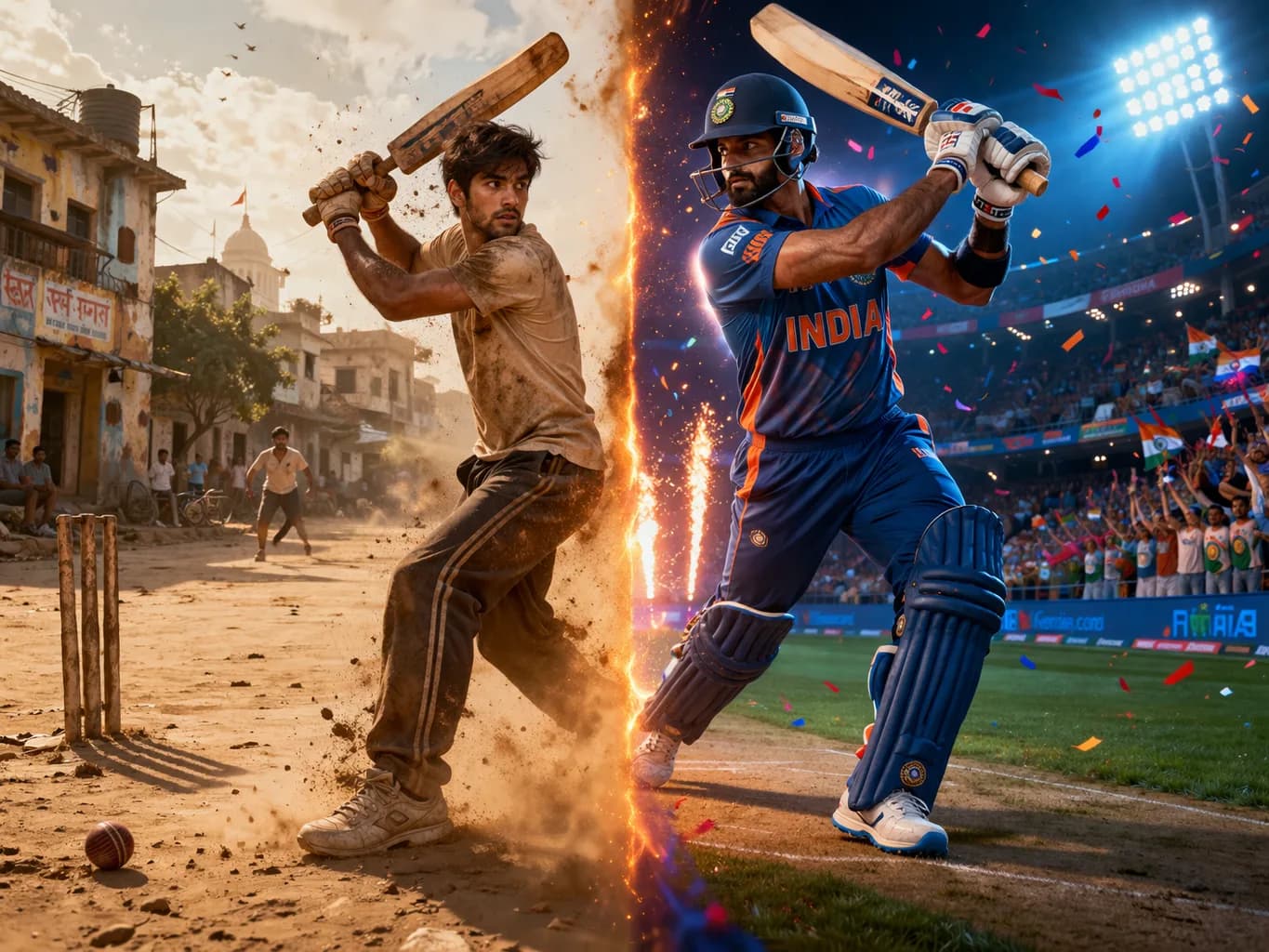
For decades, only eleven spots defined an entire nation's cricketing dreams. The IPL dismantled that ceiling — and built something far more powerful in its place.
Cricket in India has always been more than a sport; it is a national heartbeat. However, for decades, the "Rule of 11" acted as a bottleneck—thousands of elite athletes vied for only eleven spots in the national side. Many legends-in-the-making simply aged out before their first break.
The arrival of the Indian Premier League (IPL) dismantled this ceiling. Today, the IPL isn't just a tournament; it is a sophisticated, high-pressure laboratory that manufactures world-class cricketers.
250+ Players get annual broadcast exposure | 160+ Indian players per season | ₹30L Minimum base price as of 2025 |
Expanding the Ecosystem: From 11 to 250+
In the pre-IPL era, the jump from domestic Ranji Trophy matches to International cricket was a massive chasm. The IPL bridged this by creating a massive middle-tier:
10 Franchise Teams: Each with a squad of 20–25 players.
Annual Exposure: Over 250 players (including roughly 160+ Indians) get to showcase their skills on a global broadcast.
Financial Security: With the minimum base price now at ₹30 lakh (as of 2025), domestic players can focus entirely on their craft without financial anxiety.
The Democratization of Talent: Small Towns, Big Dreams
The most profound shift is geographical. Scouting networks now penetrate deep into India's hinterlands, finding "raw" talent that would have previously gone unnoticed.
The "Scouting Laboratory": Franchises like Mumbai Indians and KKR employ year-round scouts.
Success Stories: We've seen the rise of Rinku Singh (Aligarh), Yashasvi Jaiswal (Bhadohi), and more recently, the 13-year-old prodigy Vaibhav Suryavanshi (Bihar), who became the youngest IPL pick in history in late 2024.
Impact: Talent is no longer a monopoly of Mumbai, Delhi, or Bangalore.
The "Pressure Cooker" Effect: Mental Temperament
International cricket is 90% mental. Before the IPL, a debutant's first experience of a 50,000-plus crowd was their first India match.
Match Awareness: Youngsters now bowl to Heinrich Klaasen or bat against Jasprit Bumrah in front of screaming sell-out crowds.
The "Impact Player" Era: Rules like the Impact Player (though debated) have forced young cricketers to become highly specialized and adaptable to tactical shifts mid-game.
Learning from the Legends: The Dressing Room University
The IPL facilitates a transfer of "tribal knowledge" that no coaching manual can provide.
Direct Mentorship: A 19-year-old uncapped player now spends two months sharing breakfast and strategy meetings with MS Dhoni, Virat Kohli, or Pat Cummins.
Global Coaching: Players work with world-class staff like Ricky Ponting or Gautam Gambhir, fast-tracking their technical development by years.
Building India's Unmatched "Bench Strength"
The most visible result of the IPL is India's ability to field two or three world-class national teams simultaneously.
The Selection Bridge: Performance in the IPL now directly influences selection for India A tours and the Emerging Players tournaments.
The Result: When senior stars are rested or injured, the "replacements" arrive already battle-hardened and ready to win at the international level.
Conclusion: The Ultimate Talent Factory
The IPL has shifted the paradigm from scarcity to abundance. It has turned a game of "limited chances" into a meritocratic industry. India no longer just searches for talent; it engineers it.
"Only 11 players represent India on the field, but the IPL gives thousands the platform to prove they belong there. From the gullies of Bhadohi to the floodlights of the Wankhede—the IPL has proven that in modern cricket, your pincode no longer defines your potential. The gates are open; who's next?"
We are no longer watching a tournament; we are witnessing the blueprint of a sporting superpower. Is the IPL the ultimate talent factory, or is there a hidden cost to this rapid evolution? I'd love to hear your thoughts.