
Asian Games 2026
Nagoya, Japan • 19 Sept 2026 — 4 Oct 2026
3x3 Basketball
Basketball
Archery
Artistic Gymnastics
Gymnastics
Artistic Swimming
Aquatics
Athletics
BMX Racing
Cycling
Badminton
Baseball
Baseball/Softball
Basketball
Basketball
Beach Volleyball
Volleyball
Boxing
Breaking
Canoe Slalom
Canoeing
Canoe Sprint
Canoeing
Cricket
Full tournament coverage
Diving
Aquatics
Dressage
Equestrian
Esports
Eventing
Equestrian
Fencing
Field Hockey
Football
Freestyle BMX
Cycling
Golf
Handball
Ju-jitsu
Combat Sports
Judo
Jumping
Equestrian
Kabaddi
Karate
Kurash
Combat Sports
Mixed Martial Arts
Combat Sports
Modern Pentathlon
Mountain Bike
Cycling
Padel
Rhythmic Gymnastics
Gymnastics
Road Cycling
Cycling
Rowing
Rugby Sevens
Sailing
Sepak Takraw
Shooting
Skateboarding
Soft Tennis
Tennis
Softball
Baseball/Softball
Sport Climbing
Squash
Surfing
Swimming
Aquatics
Table Tennis
Taekwondo
Taekwondo
Tennis
Tennis
Teqball
Track Cycling
Cycling
Trampoline Gymnastics
Gymnastics
Triathlon
Virtual Taekwondo
Taekwondo
Volleyball
Volleyball
Water Polo
Aquatics
Weightlifting
Wrestling
Wushu
 JPN
JPN MAC
MAC CHN
CHN IND
IND KOR
KOR VIE
VIE INA
INAOverview
The Asian Games trace back to two earlier regional competitions: the Far Eastern Championship Games (1913-1934), organised by the Philippines, China and Japan, which ran ten times before collapsing amid the Second Sino-Japanese War; and the 1934 Western Asiatic Games in New Delhi, a single edition organised by Indian IOC member Guru Dutt Sondhi and involving India, Afghanistan, Sri Lanka and Mandatory Palestine. At the 1948 London Olympics, Sondhi proposed a unified continental games to help build unity across a newly post-colonial Asia. Talks continued into early 1949, and by that February seven Asian nations - India, the Philippines, Nepal, Afghanistan, Pakistan, Burma and Ceylon - had agreed on New Delhi as host and set up a governing charter under the newly created Asian Games Federation.
The first Asian Games followed in March 1951, with 489 athletes from 11 nations competing in six sports; Japan topped the medal table. The Federation governed the first eight editions through 1978. Following governance disputes and political conflicts over regional invitations, it was dissolved and replaced in November 1981 by the Olympic Council of Asia, which has run the Games ever since from its Kuwait City headquarters.
At the OCA's first Games in New Delhi in 1982, China topped the medal table for the first time, ending Japan's three-decade run at the top, and has finished first at every edition since. The 1994 Hiroshima Games marked the debut of five newly independent Central Asian nations following the collapse of the Soviet Union, and was the first edition held outside a host country's capital. From the 1990s onward, the OCA added sports rooted in Asian sporting culture alongside Olympic disciplines, including kabaddi, sepak takraw, wushu, squash and dragon boat racing.
More recently, esports and breaking appeared as demonstration or medal events, becoming official medal sports at Hangzhou 2022 (postponed to 2023 due to COVID-19), reflecting the Games' continued evolution toward modern youth-oriented disciplines.
Facts
Milestones
1951
Inaugural Asian Games
Held March 4-11, 1951 at the National Stadium, New Delhi. 489 athletes from 11 National Olympic Committees competed in 6 sports (Athletics, Aquatics, Basketball, Cycling, Football and Weightlifting). Japan topped the medal tally.
1958
First Torch Relay
The Tokyo Games introduced the first official Asian Games torch relay, formalising a tradition carried forward at every subsequent edition.
1954-1978
Formalization and Growth
Participation grew steadily through the Asian Games Federation era: Manila 1954 hosted 18 nations, and by 1978 the Games had grown to 3,842 athletes from 25 NOCs.
1981-1982
Formation of the Olympic Council of Asia
Governance disputes and political conflicts over regional invitations led to the dissolution of the Asian Games Federation. The Olympic Council of Asia was formed in November 1981, headquartered in Kuwait City, and formally began supervising the Games from the 1986 Seoul edition onward.
1982-Present
China's Medal-Table Dominance Begins
At New Delhi 1982, the first Games organised under the OCA, China topped the overall medal table for the first time, ending Japan's 30-year dominance. China has remained the top-performing nation at every edition since.
1994
Central Asian Nations Join
Following the collapse of the Soviet Union, five newly independent Central Asian nations - Kazakhstan, Kyrgyzstan, Tajikistan, Turkmenistan and Uzbekistan - made their Asian Games debut, vastly expanding the event's footprint. It was also the first edition held outside a host country's capital city.
1990s-1998
Indigenous and Non-Olympic Sports Added
The OCA introduced sports rooted in Asian sporting culture alongside Olympic disciplines, including Kabaddi (1990), Sepak Takraw (1990), Wushu (1990) and Squash (1998).
2018-2022
Modern Era: Esports and Breaking
Esports appeared as a demonstration event at Jakarta-Palembang 2018 and, together with Breaking, became an official medal sport at Hangzhou 2022 (postponed and held in 2023), reflecting modern youth sporting trends.
Editions
 India
India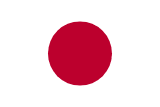 Japan
Japan Philippines
 Indonesia
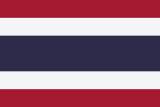 Thailand
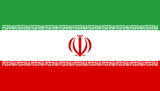 Iran
Iran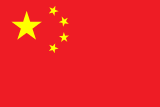 China
China South Korea
 Qatar
QatarAll-Time Medal Leaders
ChinaAll-time leader with over 1,600 golds and 3,500+ total medals; has topped the table at every edition since 1982.JapanTopped every medal table from 1951 through 1978; holds over 1,000 all-time golds and remains the second-most successful nation overall.South KoreaConsistently ranks third overall since the mid-1970s, with close to 800 all-time golds.IndiaThe inaugural host in 1951; became only the fourth nation in Games history to cross 100 medals in a single edition, at Hangzhou 2022.