

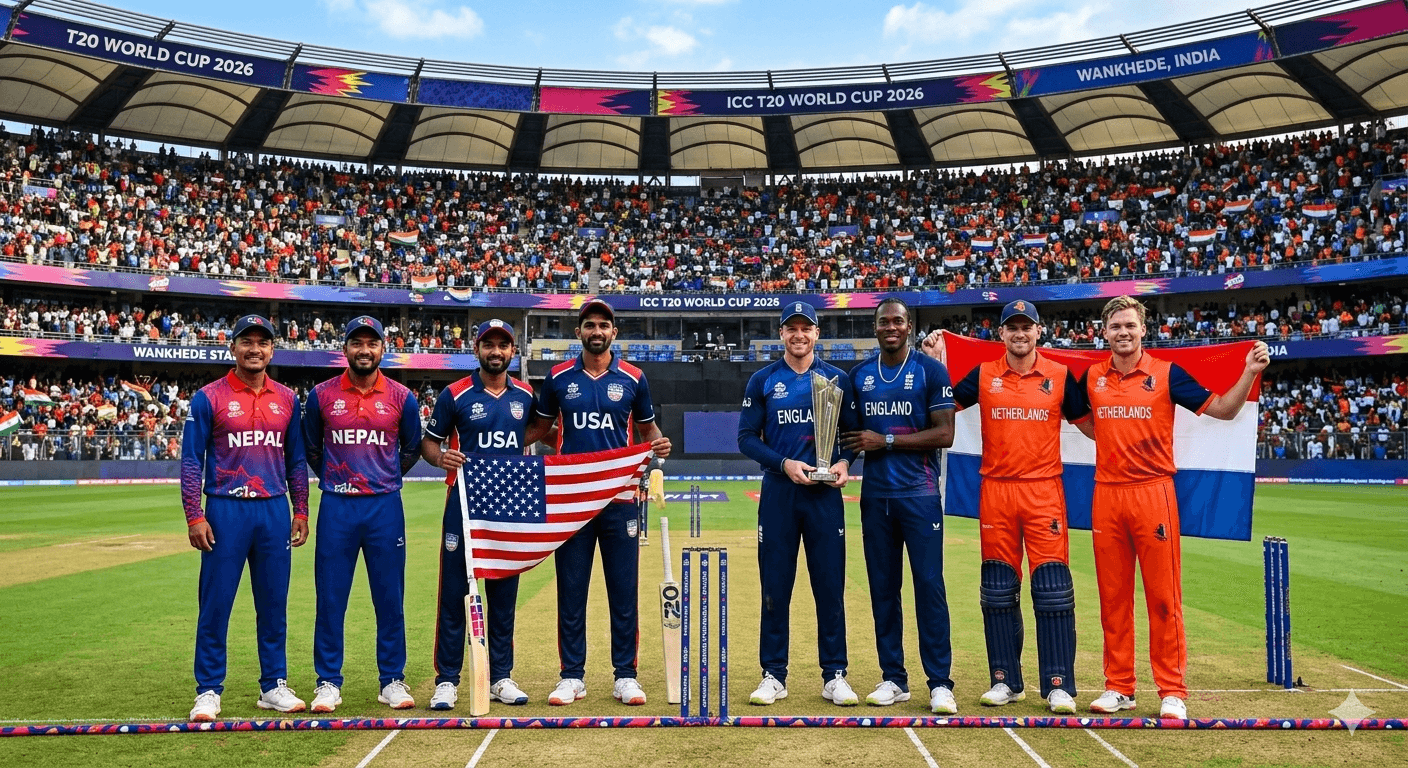
The era of the "minnow"—the team happy just to share a field with legends before collecting a souvenir jersey—is officially over. If the 2024 T20 World Cup was a warning shot, the current 2026 cycle has confirmed a tectonic shift in the sport’s hierarchy. We are no longer witnessing occasional "flukes"; we are seeing a structural transformation where teams like Nepal, the USA, Zimbabwe, and Ireland are operating with a level of tactical sophistication that has turned the group stages into a shark tank. This isn't just about heart or "spirit"; it is a quantifiable closing of the gap in skill, data-driven preparation, and the relentless democratization of the T20 format.
Take the United States, for instance. Their historic victory over Pakistan in 2024 wasn't a smash-and-grab heist; it was a clinical exhibition of modern T20 strategy. By holding their nerve to win a high-stakes Super Over, the USA proved that Associate nations have mastered the art of "short-game" leverage. They utilized local conditions, franchise-honed experience, and a fearless approach to power-hitting that caught the "Big Three" establishment off guard. Similarly, Nepal’s heartbreaking 4 run loss to England was a masterclass in batting discipline. Nepal dominated England for nineteen overs and looked in complete control of the match. However, in the final over, England’s experience in handling high-pressure situations turned the game around and secured them a dramatic victory.
The statistical inferences are startling. In previous decades, a match between a top-tier side and an Associate often felt like a foregone conclusion. Today, the "Efficiency Gap" has shrunk. Teams like Namibia, Scotland and Ireland consistently produce bowlers with economy rates that rival the best in the world, utilizing "negative" lines and high-frequency variations to neutralize traditional power-hitters. Meanwhile, Zimbabwe’s recent world-record total of 344/4 in a qualifier underscores a new reality: these nations now possess the infrastructure to develop elite ball-strikers who no longer fear the 145 km/h thunderbolt.
In this blog, we’ll dive into the data behind this rise. We aren't just looking at the scoreboard; we are analyzing the "Control %" of Associate spinners, the "Death Over" strike rates of emerging finishers, and the psychological shift that has replaced awe with aggression. From the raucous, orange-clad crowds in Kathmandu to the strategic scouting networks in Windhoek, the frontier of cricket has moved. The "small teams" are no longer the guests at the party—they are the ones threatening to take over the house.
The Inference Pillars: From Participation to Dominance
To understand why these teams are no longer pushovers, we have to look past the scorecards and into the tactical shifts. Two major inferences emerge: Bowling Economy as a Weapon and the Psychological Erasure of the "Big Team" Aura.
1. The Zimbabwe vs. Australia Anomaly: A Masterclass in Dominance
Nothing illustrates the shift better than Zimbabwe’s performance in the 2026 T20 World Cup. In a Group B clash at Colombo, the "Chevrons" didn't just compete with Australia; they dismantled them. Led by a composed 64 from Brian Bennett*, Zimbabwe posted 169/2—a total that proved insurmountable for the former champions.
The bowling effort that followed was clinical. Blessing Muzarabani (4/17) and Brad Evans (3/23) exploited a sluggish track to leave the Australian top-order in ruins at 29/4. Australia was eventually bundled out for 146, handing Zimbabwe a 23-run victory.
The "Statistical Ghost": Australia’s ICC Nightmare
While the media often calls these results "upsets," the historical data suggests a different story. In the realm of ICC T20 World Cups, Australia has never defeated Zimbabwe.
2007 T20 World Cup: Zimbabwe stunned an all-star Australian side by 5 wickets.
2026 T20 World Cup: Zimbabwe repeated the feat with a 23-run victory.
Remarkably, Zimbabwe remains the only team in the world with a 100% win record against Australia in Men’s T20 World Cup history. This isn't a fluke; it's a testament to Zimbabwe’s ability to remain tactically disciplined when facing "Goliath."
2. Watershed moment for Nepal:
The 2026 T20 World Cup provided a watershed moment for Nepal cricket at the iconic Wankhede Stadium. While the scorecards will technically show a 4-run victory for England, the narrative of the match told a story of a shifting hierarchy in global cricket. This performance wasn't a fluke; it was a symptom of a rapidly professionalizing system.
2026 and Beyond: Strategic Focus
👉League 2 Dominance: Nepal has roughly 16 ODI matches scheduled in League 2 for the remainder of 2026. Their performance at the World Cup serves as a massive psychological boost for ODI World Cup qualification.
👉Domestic Infrastructure: To move from "emerging" to "established," Nepal's next step is the formalization of a multi-day domestic format to bridge the gap between T20 flair and long-form resilience.
👉Global League Interest: Players like Lokesh Bam and Rohit Paudel have likely caught the eyes of scouts from the IPL, BBL, and SA20, which will provide them with the high-pressure experience needed to close out games like the one against England.
We can walk away with our heads held high, but we aren't satisfied with just being close anymore. We are here to win." — Rohit Paudel, Post-match.
Nepal has officially moved past the "happy to be here" phase. They are now a team that elite nations must prepare for with the same intensity they reserve for Australia or India.
3. "So Close, yet so far" for USA
The USA’s campaign in the 2026 T20 World Cup was a story of "so close, yet so far." After their historic run in 2024, the expectations were sky-high, and while they didn't replicate the Super 8 miracle, they proved they are no longer just "participants"—they are a legitimate threat.
🏏The "Aadhar vs. Green Card" Battle: Their opening match against India at the Wankhede was the highlight of their tournament. Chasing a modest target, they pushed the defending champions to the limit before falling short by 29 runs.
👉The Bowling Unit: Saurabh Netravalkar and Ali Khan showed that their 2024 form wasn't a fluke. They exploited the early swing in Mumbai, keeping world-class batters like Abhishek Sharma and Suryakumar Yadav in check during the powerplay.
👉Middle-Order Resilience: Monank Patel and Milind Kumar anchored the innings effectively, showing that the team has moved past relying solely on one or two "power hitters."
🏏Asserting Dominance Over Associates: The most clinical part of their performance was how they handled the Netherlands and Namibia.
👉The Clinical Win: They dismantled the Netherlands by 93 runs, a massive statement considering the Dutch have historically been the "kings of the associates."
👉Standard of Fielding: There was a visible leap in athleticism. The "weak links" in the field that plagued them in 2025 qualifiers were largely gone, with the team looking like a cohesive professional unit.
USA performance 2024 vs 2026
Metric | 2024 | 2026 | Analysis |
|---|---|---|---|
Highest Stage Reached | Super 8s | Group Stage (3rd place) | Despite the lower exit, the 2026 group was statistically tougher. |
Leading Run Scorer | Andries Gous (219runs) | Shubham Ranjane ( 141 runs) | Shift from reliance on migrant veterans to domestic league stars |
Team Batting SR | 122.5 (approx.) | 148.2 (approx.) | Great show of intent and attacked spinners more efficiently |
Leading wicket taker | Saurabh Netravalkar (6) | Shadley Van Schalkwyk (13) | Bowling unit has improved to Good extent |
Key Victory | vs Pakistan (full member) | vs Netherlands ( Associate King) | 2026 saw them dominate peers rather than just "upset" giants |
Big Team Scare | Held India to 111 runs | Pushed India to the 20th over chasing 162. | Proved the 2024 performance against India was not a fluke. |
The USA is no longer an "easy win" for Full Members. In the next FTP (Future Tours Program) cycle, expect to see:
👉Bilateral Series: Based on this performance, the USA is no longer viewed as an "Associate" but a "Tier-2" nation. Expect to see the ICC grant them more matches against the likes of New Zealand, West Indies, and South Africa in the 2027-2028 cycle.
👉Direct Qualification: Their consistent rankings mean they are likely to bypass regional qualifiers for the 2028 T20 World Cup. This performance will likely trigger the "Full Member" application process. If the USA can establish a multi-day domestic tournament by 2027, they could be on the path to Test Status by the end of the decade.
4. Netherlands: Punching above one's weight
The Netherlands' performance in the 2026 T20 World Cup was a masterclass in tactical discipline and "punching above one's weight." While they finished 4th in the competitive Group A, they remained a mathematical threat for the Super 8s until the very final week of the group stages.
The Dutch campaign was defined by a bowling-first philosophy and a "never say die" attitude against the world’s top-ranked sides.
1. The Bowling Masterclass (Efficiency over Pace)
The Netherlands’ bowling unit was arguably the most disciplined of the Associate nations.
The Logan van Beek Factor: In the final group game against India, Van Beek took 3/56, including the crucial wickets of India's top order. His ability to deliver under pressure solidified his status as a world-class white-ball bowler.
Spin Control: Varun Chakravarthy (playing for India) may have been the star, but the Dutch spinners matched the economy rates of the big teams for large periods, particularly against Pakistan where they restricted them to a modest 148.
2. Batting: The "Bas de Leede" Show
Bas de Leede was the heartbeat of the Dutch batting lineup.
Consistency: He was the leading light in their victory over Namibia, scoring an unbeaten 72 to anchor a tricky chase.
Middle-Order Stability: Along with Colin Ackermann, De Leede provided a bridge between the powerplay and the death overs, though the team often lacked a "true finisher" to capitalize on the platforms they built.
The "Associate King" Paradox
The Netherlands finds itself at a crossroads after the 2026 tournament. Their future depends on moving beyond the "Associate" tag.
1. The Push for Full Membership
Following the tournament, Bas de Leede and captain Scott Edwards have been vocal about the need for bilateral series.
The Reality: Unlike the USA (which has the MLC) or Nepal (which has massive fan backing), the Netherlands relies on a small but highly professional domestic structure.
The Goal: Their performance—losing by only 17 runs to India and nearly upsetting Pakistan—is the strongest case yet for the ICC to grant them more matches against Full Members outside of World Cups.
2. Professionalization & Global Leagues
The "Dutch Model" is unique because many of its players compete in the English County system.
The Risk: Availability remains an issue during non-ICC windows.
The Opportunity: Players like Kyle Klein and Michael Levitt emerged in 2026 as high-potential talents. Expect to see them picked up as "Associate Overseas" players in the ILT20 or the Hundred, which will further improve the squad’s depth.
3. Strategic Outlook (2027-2028)
Direct Qualification: Their solid NRR and win over Namibia keep them comfortably in the top tier of Associate rankings, likely ensuring direct entry into the 2028 T20 World Cup.
Focus on Finishing: The 2026 analysis shows the Dutch can bowl and anchor; their future success depends on developing power-hitters in the 150+ strike rate bracket to turn "close losses" into "historic wins."
"We've proven we can compete with the best for 35 overs. Our future is about owning those final 5 overs." — Ryan Cook, Head Coach.
Which Associate nation do you think will be the next to break into the Top 10? Cricket is a conversation that never ends. Let’s keep it going—what did we miss?