
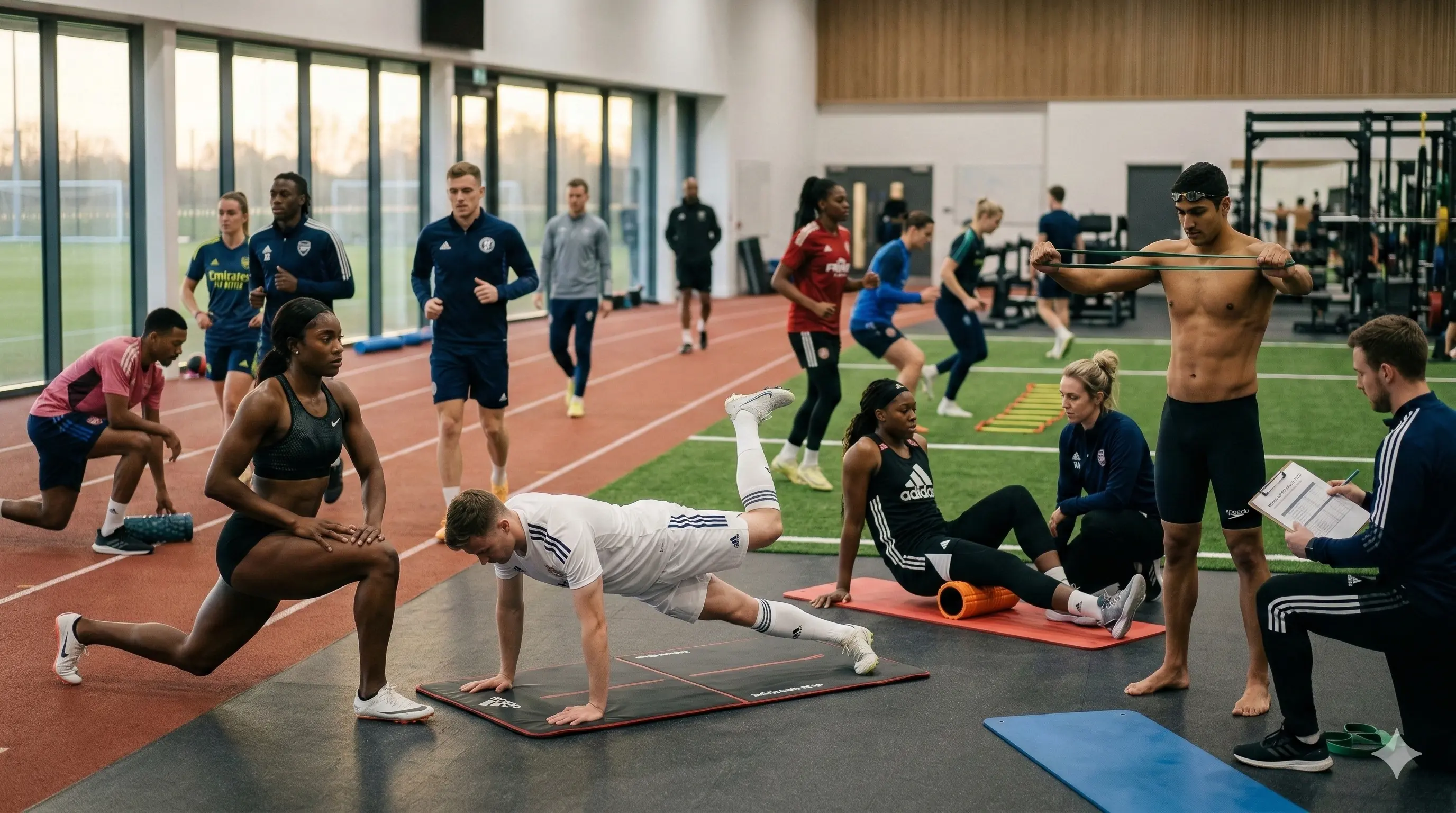
A large proportion of sports injuries are associated with overtraining, inadequate recovery, and sudden spikes in training load.
Every athlete has been there. You're training hard, feeling good, pushing your limits — and then suddenly something snaps, pulls, or gives way. A muscle strain. A twisted ankle. A knee that just doesn't feel right.
Most people chalk it up to bad luck. "These things just happen."
But here's what sports science has been telling us for years: most sports injuries don't just happen. They build up quietly, over days and weeks, while your body is sending signals you're probably ignoring.
This article breaks down exactly why athletes get injured, what your body is actually trying to tell you, and how understanding just a few key things can keep you on the field longer.
The Biggest Myth in Sports: "More Training = More Risk"
Here's something that surprises most people.
Research published in the British Journal of Sports Medicine found that athletes who had been training consistently for 18 or more weeks before getting injured were actually less likely to get injured again — compared to athletes who trained less.
Let that sink in. The fitter, harder-working athletes were better protected.
This is what scientists call the Training-Injury Prevention Paradox. The idea is simple: your body becomes more resilient when it's regularly challenged — as long as you give it time to adapt. The problem isn't training hard. The problem is training wrong — specifically, increasing your training too quickly, without enough recovery in between.
Think of it like a rubber band. If you stretch it slowly and regularly, it becomes flexible and strong. If you yank it suddenly after it's been sitting still, it snaps.
Your muscles, tendons, and ligaments work the same way.
So What Actually Causes Most Injuries?
There are four main culprits. Most injuries trace back to at least one of them.
1. Sudden Spikes in Training Load
Training load is just a fancy term for how much physical stress you're putting on your body in a given period. It includes how long you train, how hard you train, and how often.
Your body is remarkably good at handling load — if it gets to build up gradually. The issue happens when you suddenly do a lot more than your body is used to.
For example: you train lightly for two weeks due to exams or travel, then come back and immediately try to match your previous intensity. That sudden jump is one of the most common triggers for soft-tissue injuries like muscle strains and tendon problems.
Sports scientists often talk about acute load (what you did this week) vs chronic load (what you've been doing consistently over the past month). When this week's load is dramatically higher than your monthly average, your injury risk spikes.
In plain terms: If you've been doing 3 training sessions a week and suddenly jump to 6 sessions with double the intensity, your body hasn't been prepared for that. Something is likely to break down.
2. Not Recovering Properly
Recovery isn't a luxury. It's literally where the adaptation happens.
When you train, you're breaking your muscles down. The recovery period — rest, sleep, nutrition — is when your body rebuilds them stronger. If you skip this phase, you're breaking down without rebuilding. Over time, the accumulated damage leads to injury.
Common recovery mistakes athletes make:
Training hard on back-to-back days without a lighter session or rest day in between
Returning to full training too soon after a tough match
Ignoring muscle soreness and pushing through it
Not getting enough sleep (more on this in a moment)
Muscle soreness is actually a useful signal. Mild soreness 24–48 hours after training (called DOMS — Delayed Onset Muscle Soreness) is normal. But if you're still sore 3–4 days later, or the soreness is sharp rather than dull, your body is telling you it needs more time.
3. Poor Sleep — The Most Underrated Factor in Injury Prevention

Most athletes obsess over their training programme and nutrition. Almost nobody talks about sleep.
But the research is startling.
A study published in the Journal of Pediatric Orthopaedics followed 112 young athletes and found that those who slept less than 8 hours per night were 1.7 times more likely to get injured than those who slept 8 or more hours. Not a little more likely — almost twice as likely.
Here's why sleep matters so much:
Muscle repair happens during sleep. Growth hormone, which rebuilds damaged muscle tissue, is primarily released during deep sleep. Less sleep = less repair.
Your coordination suffers. Sleep deprivation slows your reaction time, reduces balance, and impairs your ability to judge distances and movements. A tired athlete is a clumsy athlete — and clumsiness causes injuries.
Your pain tolerance drops. Research shows that poor sleep makes your brain more sensitive to pain and less able to tolerate it. This means small issues feel worse and minor problems turn into bigger ones.
Your decision-making gets worse. In fast sports, split-second decisions protect you from awkward landings, collisions, and overextension. When you're sleep-deprived, those decisions slow down.
The bottom line: Sleep is not the time when nothing is happening. Sleep is when your body does its most important repair work. Treating it as optional is one of the most expensive mistakes an athlete can make.
4. Ignoring the Warning Signs
Your body has a very efficient communication system. The problem is that athletes are trained — by coaches, by culture, by their own competitive drive — to ignore it.
Persistent fatigue that doesn't go away after a rest day. Muscle soreness that lingers well past 48 hours. Motivation that has dropped noticeably. Performance that feels harder than usual for no obvious reason. Disturbed sleep even when you're tired.
These are not random. These are your body's way of saying: "I haven't fully recovered from what you put me through."
When athletes push through these signals repeatedly, the body eventually forces the issue — through an injury that's impossible to ignore.
What Does "Recovery" Actually Mean?
Recovery is often misunderstood as just "doing nothing." But recovery is an active process with several components.
Rest doesn't always mean lying on the couch. Active recovery — light walking, swimming, gentle cycling — keeps blood flowing to sore muscles and actually speeds up the repair process more than complete inactivity.
Sleep is the single most powerful recovery tool available to any athlete. Aim for 7–9 hours consistently. If your schedule makes this difficult, even a 20-minute nap has been shown to partially offset sleep debt.
Nutrition matters immediately after training. Your muscles are most receptive to nutrients in the 30–60 minute window after exercise. Getting protein and carbohydrates in during this window gives your body the raw materials it needs to rebuild.
Hydration is often overlooked as a recovery factor. Dehydrated muscles recover slower, cramp more easily, and are more prone to strain. A rough guide: your urine should be pale yellow. Dark yellow means you need more water.
Mental recovery is real too. Psychological stress — whether from exams, personal problems, or competitive pressure — raises your body's stress hormone (cortisol), which actively slows down physical recovery. An athlete going through a stressful period needs more recovery time, not less.
The Signals Your Body Sends Before an Injury
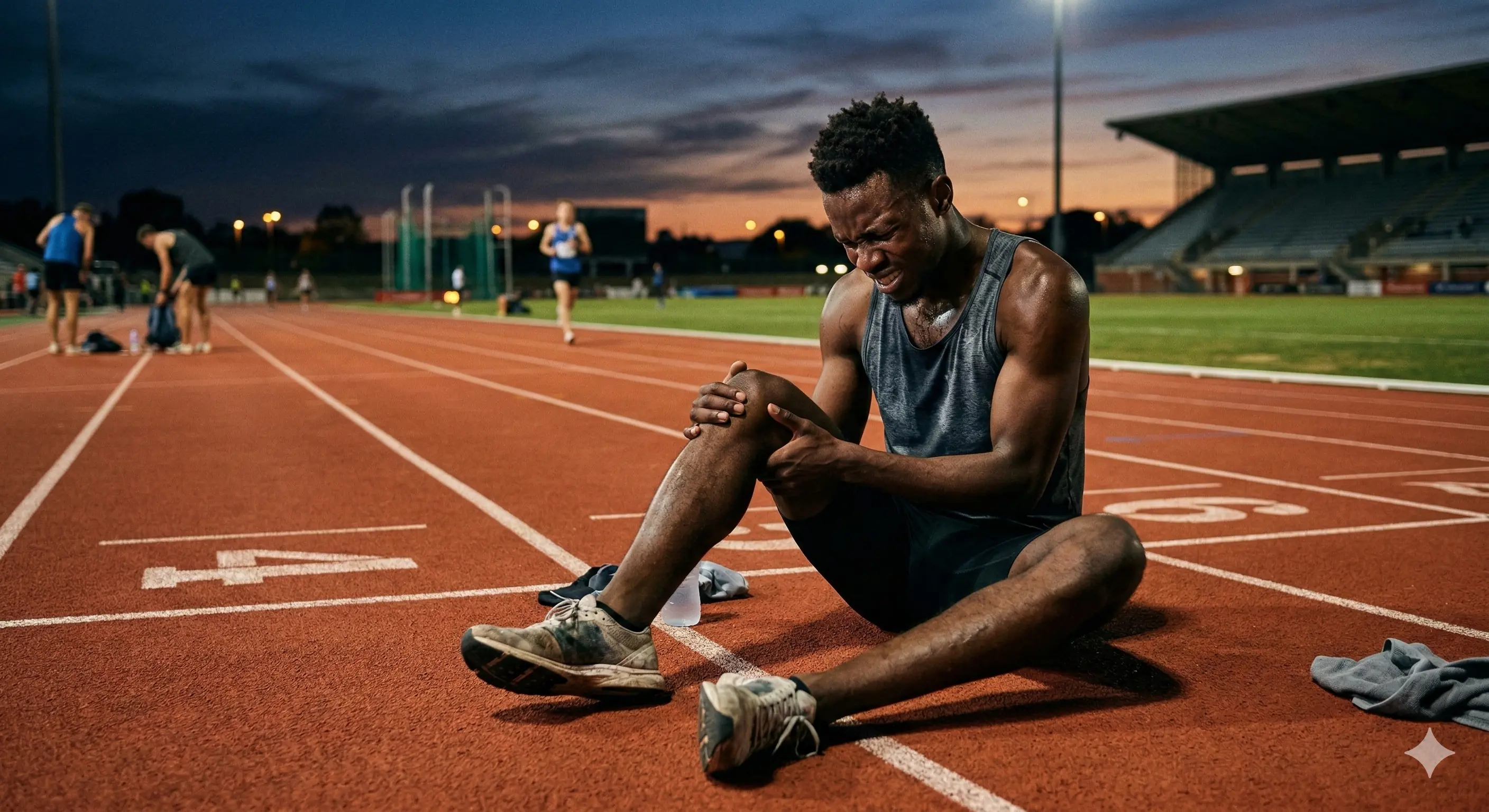
Injuries rarely appear from nowhere. In most cases, the body was already communicating for days before the actual injury event. Here are the pre-injury signals most athletes learn to recognise too late:
Persistent muscle tightness — not the normal post-training soreness, but a tightness that keeps coming back in the same spot, even on rest days.
Sharp or localised pain — as opposed to general muscle fatigue. If it hurts in a specific point when you press on it, that area is under stress.
Performance dropping despite equal or greater effort — if your sprint times are getting slower or your strength is declining without an obvious reason, your body is fatigued at a deeper level.
Disturbed sleep when you're physically tired — this is a classic sign of overtraining. Your nervous system is so overstressed that even when you're exhausted, your sleep quality is poor.
Mood changes and loss of motivation — athletes who are overtrained frequently report feeling irritable, unmotivated, and mentally flat. This isn't a character issue. It's a physiological response.
A Simple Way to Think About Your Risk
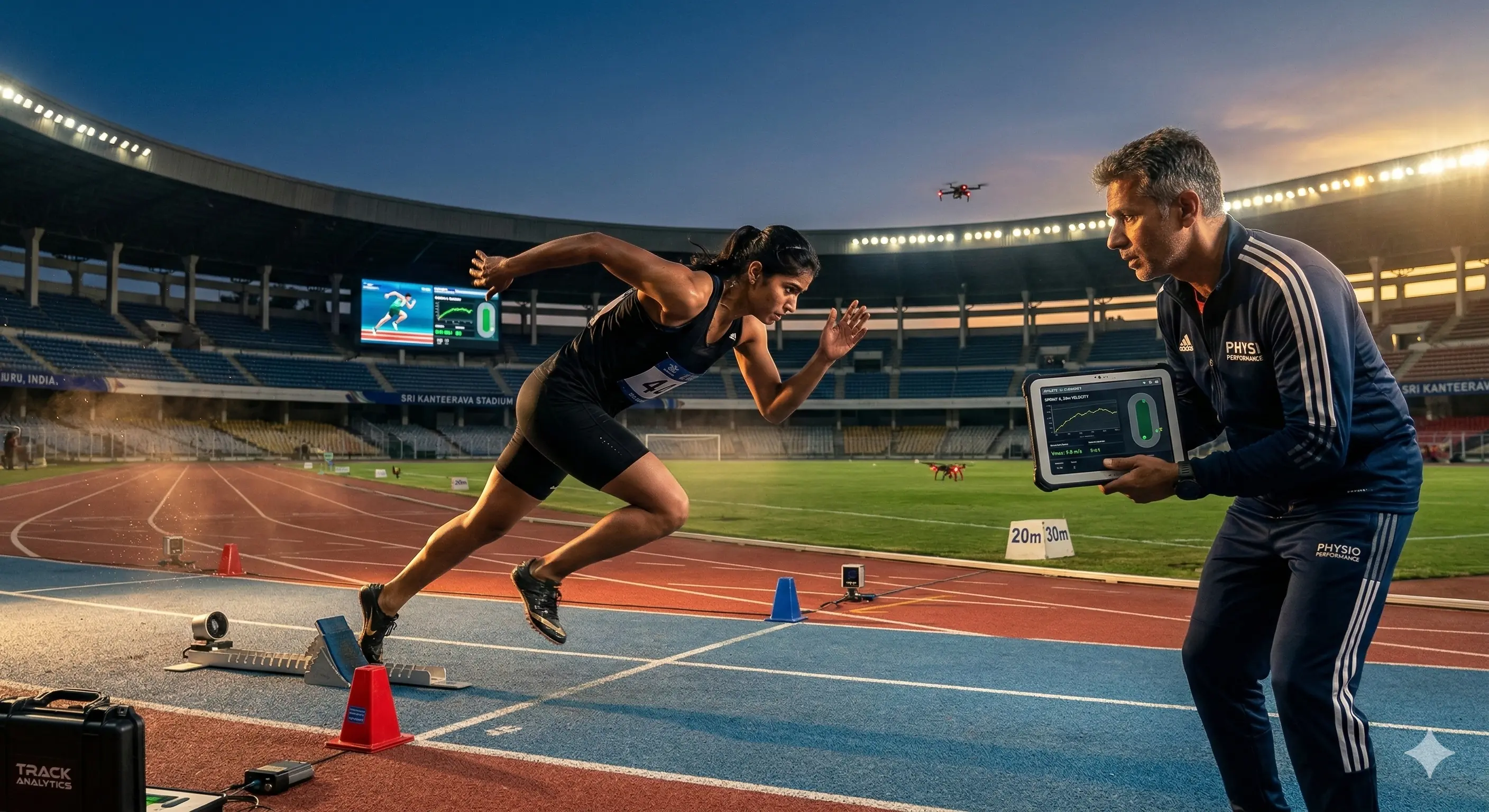
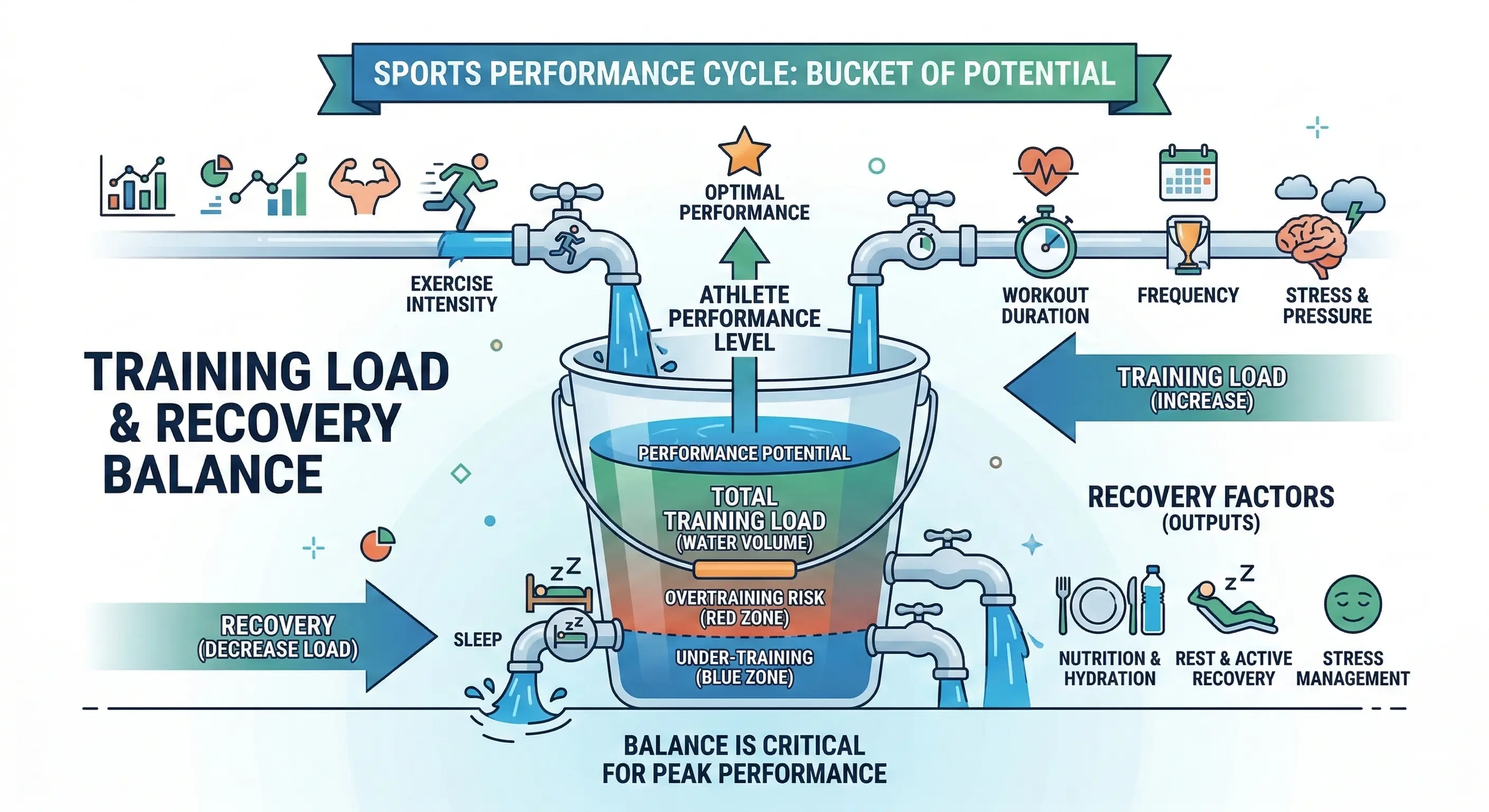
Sports scientists use the concept of a training load to recovery balance. Think of it like a bucket.
Every training session, match, stressful day, and poor night's sleep adds water to the bucket. Every rest day, good sleep, proper meal, and recovery session removes water.
When the bucket overflows, injury happens.
The goal isn't to keep the bucket empty — an empty bucket means you're not training hard enough to improve. The goal is to manage how full it gets. Keep it productive but never overflowing.
This is why two athletes doing the same training programme can have completely different outcomes — because their buckets start at different levels, fill at different rates, and empty at different speeds. One athlete is well-rested, eating well, and managing stress. The other is sleeping 5 hours, skipping meals, and dealing with pressure from multiple directions. Same programme. Very different risk.
What This Means for You Practically
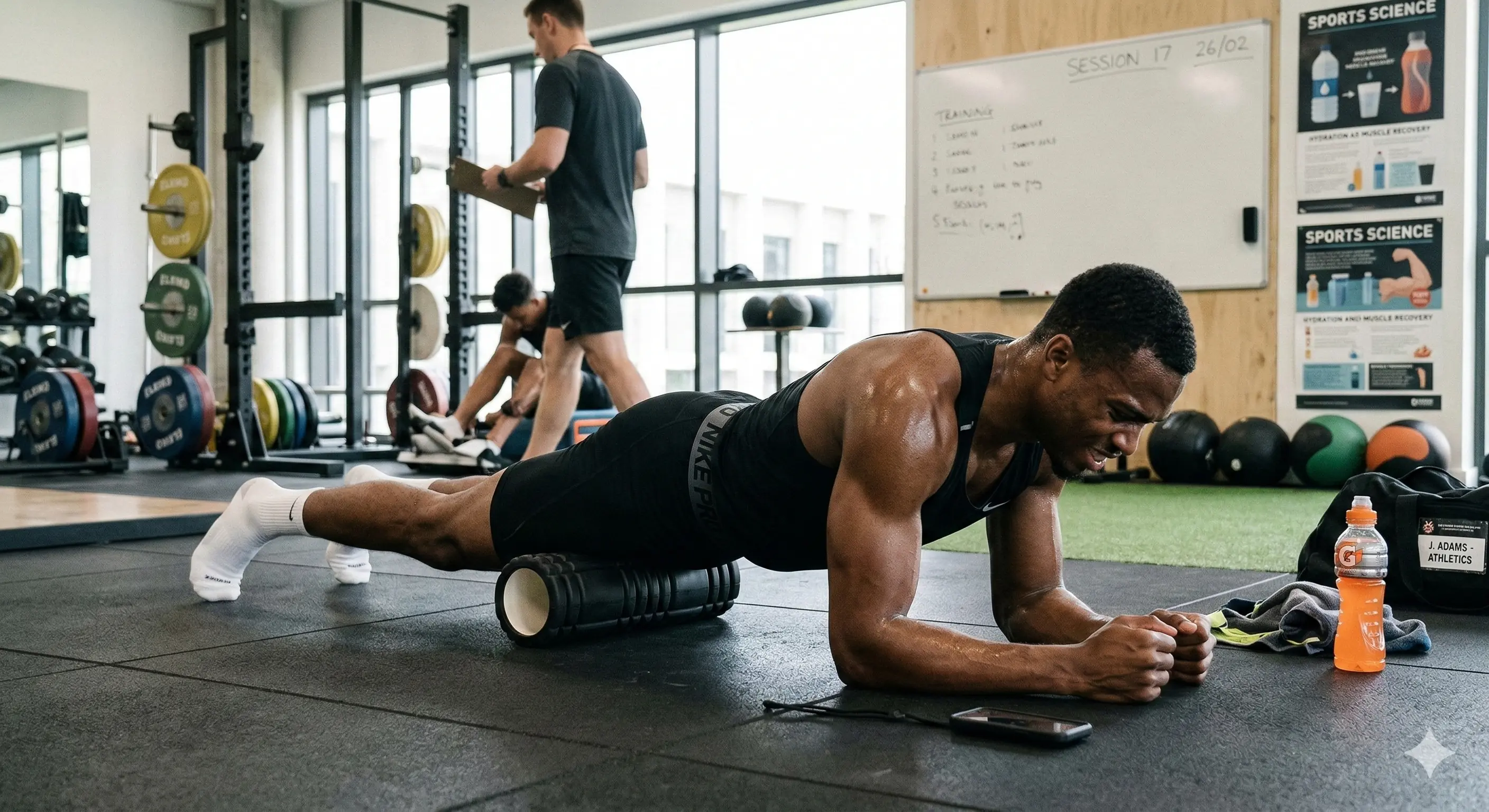
You don't need expensive technology or a sports science degree to protect yourself. Here's what actually matters:
Track how you feel. Not just your performance numbers — but your energy, your mood, your sleep quality, and how your body feels when you wake up. These subjective signals are highly predictive of injury risk.
Don't skip rest days. A rest day isn't wasted training time. It's when the training you already did becomes strength.
Increase training gradually. A commonly cited guideline from sports scientists is to avoid increasing your total weekly training load by more than 10% from one week to the next. This gives your body time to adapt.
Take sleep seriously. If you're doing everything right in your training but sleeping 5–6 hours a night, you are actively undermining your own work. Sleep more. It's not complicated.
Listen to the first signal, not the last. The time to address soreness, tightness, or fatigue is when it first appears — not when it's become an injury that puts you out for weeks.
Final Thought

The athletes who stay on the field the longest aren't the ones with the highest pain tolerance. They're the ones who understood that recovery is part of the training — not separate from it.
Training breaks your body down. Recovery builds it back up stronger. Both halves are equally important. Miss one, and the other becomes a risk instead of a benefit.
Your body is not fragile. But it does have limits, and it will always tell you when you're approaching them. The skill is learning to listen.
This article is for educational purposes only and does not constitute medical advice. If you are experiencing pain, persistent soreness, or suspect an injury, please consult a qualified sports medicine professional or physiotherapist.
Sources & References
Gabbett, T.J. (2016). The training–injury prevention paradox: should athletes be training smarter and harder? British Journal of Sports Medicine, 50(5), 273–280. Read on PubMed
Milewski, M.D. et al. (2014). Chronic lack of sleep is associated with increased sports injuries in adolescent athletes. Journal of Pediatric Orthopaedics, 34(2), 129–133. Read on PubMed
Charest, J. & Grandner, M. (2020). Sleep and athletic performance: impacts on physical performance, mental performance, injury risk and recovery. Clinical Sleep Medicine, 15, 41–57. Read on PMC
Load Management and Injury Prevention in Elite Athletes. Premier Science, December 2025. Read here
Memorial Hermann Rockets Sports Medicine Institute. Sports Injury Prevention. Read here
American Academy of Clinical Sleep Medicine (AACSM). Sleep Deprivation and Increased Risk of Sports-Related Injuries. Read here